

Consider the cage above Saburtalo. By day it is nothing much to look at: a rectangle of concrete, a net slung round the perimeter, a floodlight that honestly illuminates one half of the pitch and is faintly embarrassed about the other. There are dozens like it across the city, tucked behind schools and apartment blocks, and you would walk past every one of them without a second glance. Then it turns eight on a Tuesday.
And at eight on a Tuesday twenty-two men who met an hour ago are playing as if the result will be read out at their funerals. A software engineer from Bangalore is marking a chef from Kyiv. Someone shouts in Georgian, someone answers in English, a third man swears fluently in both, and the ball does the rest of the translating. Nobody here is being paid. That, as it turns out, is the entire point.
Multiply that Tuesday by three and a half years and you arrive at the number this whole thing is really about: more than 1,400 matches played in Georgia through a single app, close to 26,000 separate occasions on which somebody laced up, crossed the city and got a game. There are no cameras and no anthem. There is a WhatsApp group, a booking at nine, and a large number of people who will go home happier than they arrived. Whether you have just landed in Tbilisi, lived here for years, or are passing through for a week with your boots hopefully in the bag, this is how you get into one of them. This week.
The scene, in numbers
Here is the amateur game in Georgia rendered as arithmetic, measured from February 2023 to a July 2026 that is not even finished yet. It is not a rumour that football happens here. It is a fixture list, and it is longer than you think.
Tbilisi is a football city (and it plays after dark)
The modern scene has an origin story, and like most origin stories it is really about people landing somewhere new and needing something to do with the evenings. In the spring of 2022 a wave of newcomers arrived, and the games organised themselves the way games always have: a chat, a pitch, a time, and whoever turns up. What began as a few strangers looking for a kickabout hardened into a habit, then a rhythm, then a calendar. Programmers, cooks, a retired professional or two, students, and the local lad who wandered over to ask when the next one is now share the same square of artificial grass.
This is the part worth understanding before any of the practical business. In Tbilisi, football is the machinery by which people who did not grow up together end up knowing each other. The supra has its tamada, its toastmaster; the cage has the loud one in the number 10 shirt who is quite certain he was fouled. Both, in the end, are about belonging. You do not need a team. You need a time and a place, and both are easier to find than the flat, the language, or a plumber who answers his phone.
Football is the machinery by which people who did not grow up together end up knowing each other.
Where the city plays
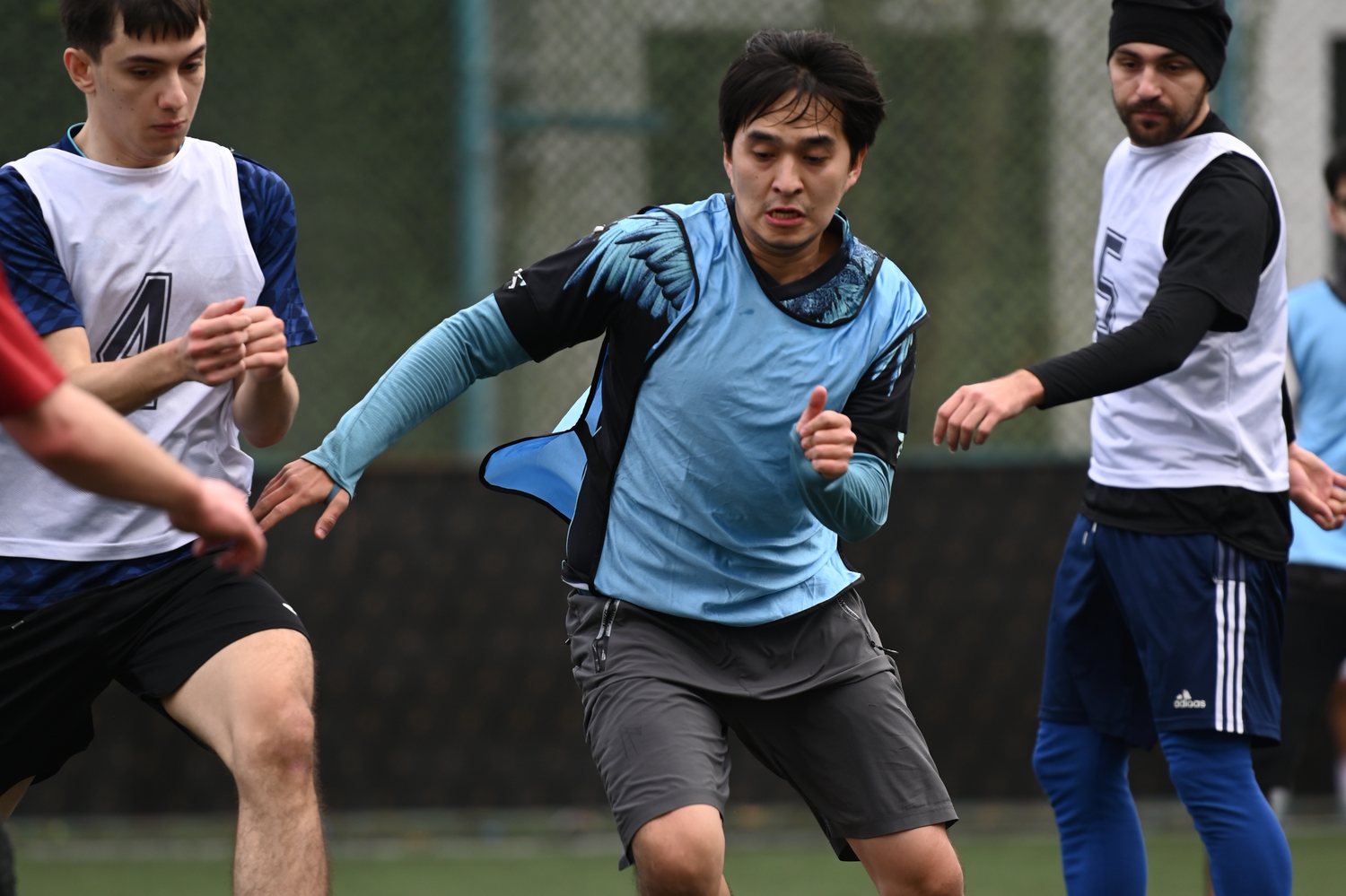
The games cluster, the way most things in Tbilisi cluster, in a handful of districts. Saburtalo is the beating heart by a distance, a dense grid of school cages and arenas that never quite goes dark. Didube and Marjanishvili carry a heavy share of their own, Dighomi holds the north west, and Vera, Ortachala and Gldani keep their smaller fires burning.
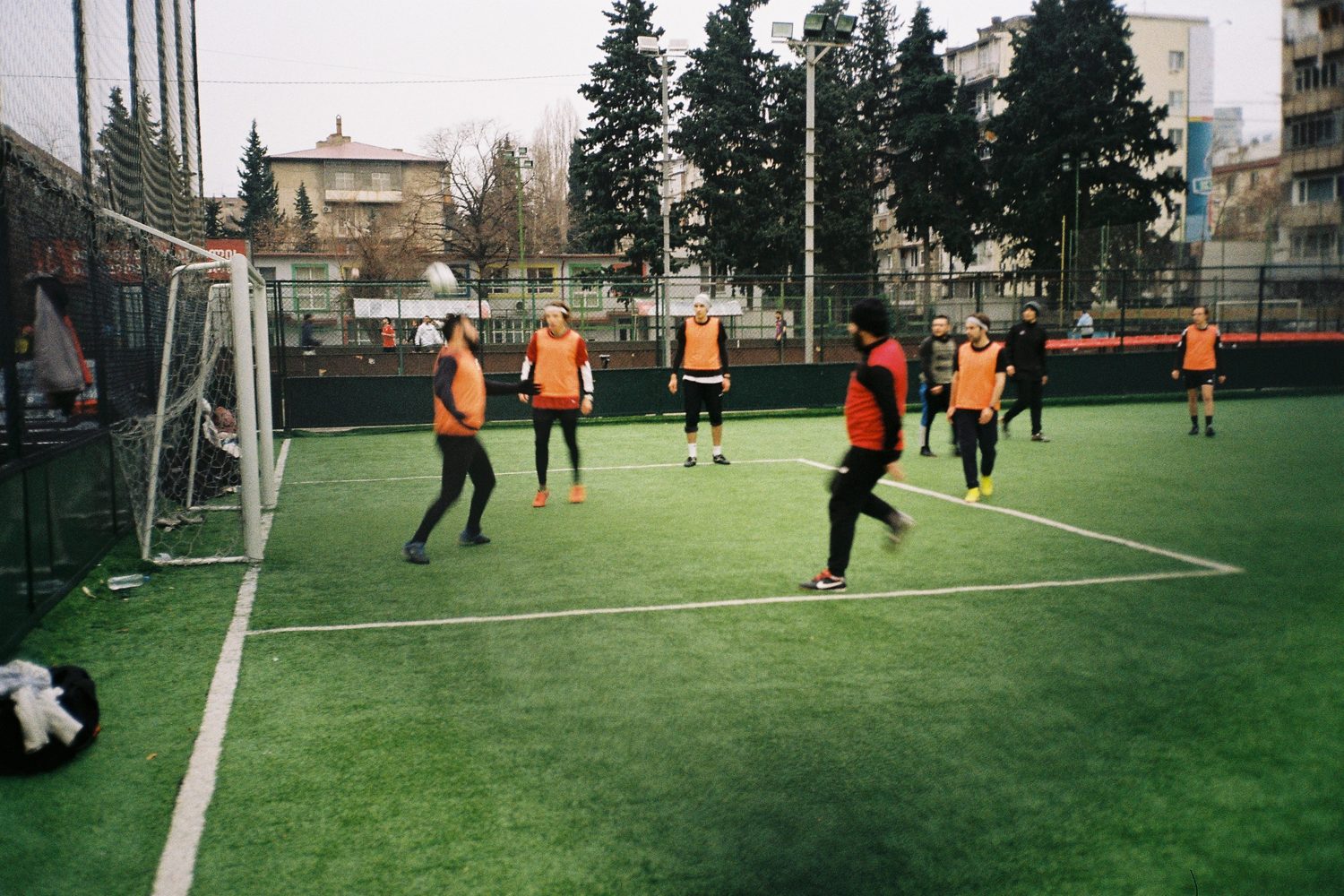
The pitches themselves are mostly fourth-generation artificial turf, floodlit, and playable more or less all year, because Tbilisi weather is forgiving and the games carry on outdoors deep into a winter that softer cities would treat as an excuse.
How Tbilisi plays: formats, bibs and the small stuff
The default is five-a-side, the small, fast, touch-heavy version, and it is the most common format here by a street. But the range is real, from claustrophobic 2v2 and 3v3 up through 6v6 and 8v8 to the occasional full eleven for the nostalgics who miss the lung-burning and the long diagonal. If you learned your football on a proper pitch, it is still here, waiting for you.
A few small tells reveal how quietly organised all this has become. Bibs are handed out at roughly half the games, so you are not squinting to work out who is on your side. Video rolls at around four in five, which is why a man will re-watch his one good goal for three days and describe the finish, to anyone who will listen, as inevitable. A referee turns up at maybe one game in fifteen; the rest run on the honour system and the phrase hand ball, my fault, restart. Most games carry a small per-player fee, and three in four quietly track a skill rating, for the sort of person who needs a table even in a park.
Beyond pickup: tournaments and leagues
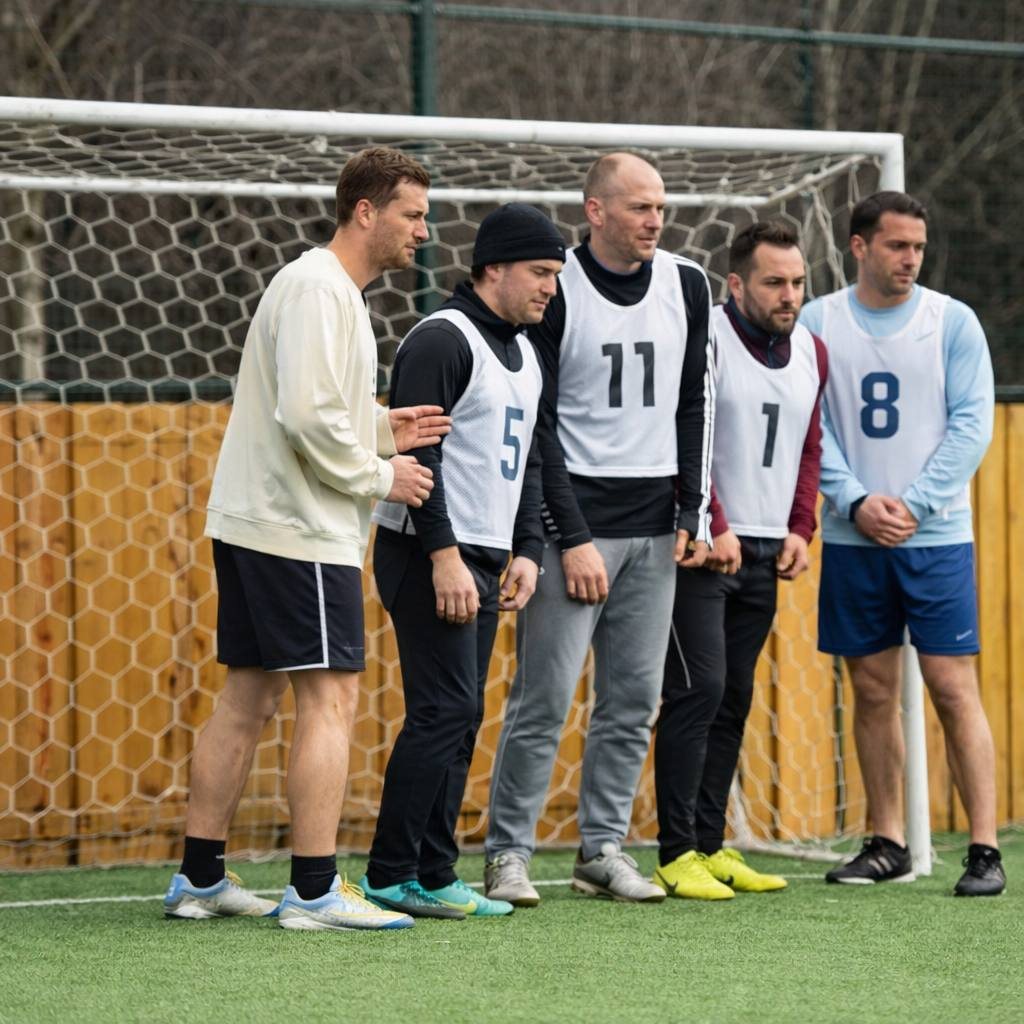
If you assume all of this stops at a friendly evening kickabout, you are underselling the place badly. Across these years, nearly 800 matches in Tbilisi have been played in a proper multi-team tournament format: cups, group stages, knockout nights with all the attendant drama of grown men taking a Tuesday extremely seriously.
And it accretes. Random Tuesday line-ups thicken into permanent teams, more than 80 of them in the city, each with a name, a set of colours, and a group chat that conducts long theological arguments about substitutions. In the spring of 2026 a full corporate season kicked off, the HORECA and Service Industry League: ten sides drawn from the city's restaurants and hotels, March to May, waiters and chefs suddenly playing for something. The keenest carry a single roster into more than one competition at once, because one league table is never quite enough.
Behind every regular fixture, though, is one person who built it. The organisers here are not merely booking pitches; they are growing small republics of their own: a core of regulars, a chat that fills a Tuesday in the time it takes to boil a kettle, a crest, a reputation. The signups and the payments and the statistics run themselves, which leaves the organiser free for the single job that actually matters, which is getting everyone, somehow, onto the grass.
It starts with you turning up once on a Tuesday. It ends with you owning a team, and the team owning a fixture list.

Run games yourself? Build your own regulars and community on Playbox.
Create a gameWhat it costs and how to rent a pitch in Tbilisi
There are two ways in, and both are gloriously cheap. You can rent a whole pitch and summon your own crowd, booking a football pitch in Tbilisi online, by the hour, at a time of your choosing. Or, if you turned up alone, you simply join a game that already exists, pay your share, and let somebody else lose sleep over the booking, the bibs and the balance of the sides.
Split across eight or ten people, an evening on the turf in Tbilisi costs less than the two coffees you would otherwise have had, alone, at home.
No team? No problem
This is the sentence that keeps a newcomer standing on the touchline, so let us dispatch it cleanly. You do not need to bring anybody. The entire architecture of an organised pickup game is built on the lone signup: you put your name down as one person, and the sides are drawn on the spot. You arrive alone, someone hands you a bib, you play, and by the second game nobody remembers you were ever new. By the third, you are the one texting the group to ask where Thursday's game is.
- 1Pick a game near you (day, district, format).
- 2Reserve your spot.
- 3Turn up ten minutes early: boots, shin pads, water.
- 4Play. Say yes to the next one.
Ready now? Find a game near you and reserve a spot.
Play in your browserWhat to expect on the pitch
Every level turns up, from the man who has not played since university and mentions it twice, to someone quietly, genuinely excellent. Nobody is scouting you. The unwritten laws are the same on every continent: pass the thing, do not attempt to dribble the entire second half, do not slide in on a stranger on concrete, and shake hands at the end.
Language is not the barrier you fear. The games run in a warm confusion of Georgian, Russian and English, settled by pointing and eyebrows, and football, invented precisely for people with nothing else in common, does the rest.
FAQ: playing football in Tbilisi
Where can I play football in Tbilisi as a foreigner?+
Mostly in Saburtalo, Didube, Dighomi and the central Marjanishvili area, on floodlit artificial pitches. You join an organised pickup game rather than needing your own team.
How much does it cost to play football in Tbilisi?+
Joining an organised game is usually around 15 to 20 GEL per player. Renting a whole pitch runs from about 60 GEL/hour at grounds like Lisi up to around 100 GEL/hour at premium academies, split across everyone.
How do I rent a football pitch in Tbilisi?+
You book a pitch online by the hour, choosing your slot in advance. Popular grounds start around 60 GEL/hour; premium academies reach about 100 GEL/hour. Or skip the booking entirely and join a game where the pitch is already reserved.
Do I need a team?+
No. You sign up solo and teams are made on the spot. This is the normal way to play here.
Is it beginner-friendly?+
Yes. Games span all levels and most are casual and self-refereed. Bibs are provided at about half of them.
What formats can I play?+
Five-a-side is the most common, with everything from 2v2 up to 11-a-side available.
Are there amateur leagues in Tbilisi?+
Yes. Alongside pickup games there are multi-team tournaments and league seasons, including a corporate HORECA & Service Industry League, plus 80+ permanent teams.
Can I play in winter?+
Yes. Tbilisi plays outdoors most of the year; indoor halls exist for the coldest, wettest nights.
 App Store
 Google Play